
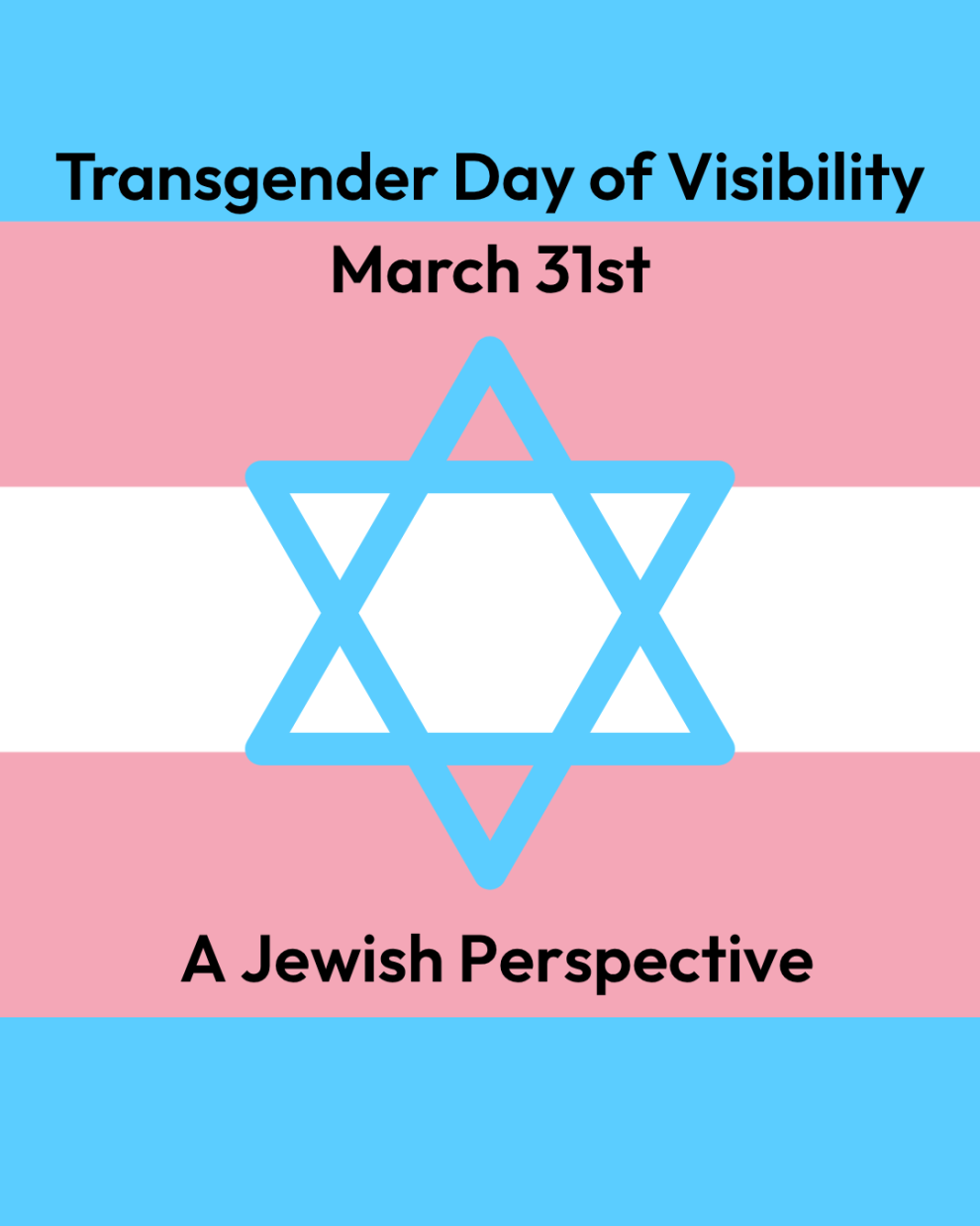
Transgender Day of Visibility (TDOV) takes place each year on March 31st to honor and recognize the resilience, dignity, and accomplishments of trans people around the world. It is also a day to raise awareness about the discrimination and barriers that trans communities continue to face.
In my opinion, this day is deeply Jewish. TDOV connects directly to core Jewish values. B’tzelem Elohim teaches that every person is created in the image of G-d. Kavod Habriyot calls on us to treat every human being with dignity and respect. These are not abstract ideas. They are expectations for how we show up in our communities, especially for people who are pushed to the margins. TDOV also speaks to Tzedek, Tzedek Tirdof, the responsibility to pursue justice in real and tangible ways.
There is also a historical piece that feels important to name. Jews and trans individuals were both targeted by the Nazi regime, labeled as “other,” stripped of rights, and dehumanized. Naming that history is not about saying the experiences are the same. It is about recognizing patterns and understanding our responsibility when we see those patterns begin to show up again.
This year, TDOV feels especially significant. On February 26th, 2026, the Kansas state government passed a law that invalidated the driver’s licenses of trans people in the state overnight and required people to surrender their IDs. Legal challenges have already been filed, but the impact was immediate. People lost access to basic identification that allows them to move through daily life safely and with independence.
For Jewish queer and trans people, this news felt especially unsettling. Regardless of politics, it is hard to ignore the parallels. On October 5, 1938, the Nazi government invalidated passports held by Jews and required them to be turned in. The point of naming this is not to equate the two situations, but to acknowledge a familiar pattern of targeting a group by taking away identification, mobility, and dignity.
I know some people see that comparison as a stretch. I think about something my childhood rabbi and trans advocate, Rabbi Daniel Bogard, has said: “Not every 1935 becomes a 1942, but every 1942 was preceded by a 1935.” It is a reminder that serious harm often begins with smaller steps that people are told not to worry about.
So what can we do to support the trans community, especially when things feel like they are moving in the wrong direction? We can act in alignment with our values. That means creating spaces in our Jewish communities where people are respected and affirmed. It can look like putting up “Trans Jews Belong Here” signs, helping people find supportive affinity groups, making sure there are gender-neutral bathrooms, using the correct names and pronouns, and having clear policies around harassment and bullying.
It also means listening to trans voices, especially within our own communities, and being open to learning. Supporting trans people is not separate from Jewish life. It is part of living our values.
TDOV is not just about visibility for a single day. It is a reminder of who we are meant to be all the time.
More Resources Here:
Trans Justice Narrative Shifts
Talking About Anti-Trans Legislation Through a Jewish Lens
How Your Jewish Community Can Be a Safe Haven for Trans People
“We Cannot Abandon the Fight for Trans Rights in Kansas. Or in Indiana. Or Anywhere.”
“What Queer Jews Have to Say About Kansas”
If you would like to continue this conversation or share your own reflections, please reach out to the CUJF Jewish Family Service Coordinator at [email protected].