
I don’t speak about October 7 very often. I’ve rarely shared what friends lived through at NOVA or the losses that touched people I care about. I haven’t gone into detail about the images and stories that filled my screen, or the days spent worrying about loved ones. Instead, I found myself becoming quieter. As a social worker, I understand how trauma and grief move through us, and yet I noticed myself doing the very things I know make healing harder. Why?
In the weeks after October 7, I felt a noticeable shift around me. Parts of my identity that once felt grounding, my Judaism, my heritage, my community, suddenly felt uncertain to express openly. I became more cautious in spaces I had always trusted, including queer and professional environments. I found myself tucking away symbols of my Jewish identity or avoiding conversations that once felt natural. I could feel myself acting out of self-protection rather than authenticity. And still, I stayed quiet. Why?
Because many of us were receiving the same messages, sometimes directly, sometimes through silence, that our trauma did not matter, or that acknowledging our pain somehow invalidated someone else’s. Over time, this can lead people to question their own reactions, doubt their perceptions, or wonder whether their grief is even legitimate. I know I wasn’t alone in feeling this.
And then something shifted. Others were naming what we, what I, had been living.
On May 13, 2025, an article in the Journal of Human Behavior in the Social Environment by Miri Bar-Halpern and Jaclyn Wolfman finally gave language to this experience: systemic traumatic invalidation. Their work expands the idea beyond interpersonal dismissal and names the patterns many in the Jewish community have felt since October 7, being unseen, unheard, and unprotected within the very systems meant to support us. This framework helped me understand the weight we had been holding, often silently. And it made me realize what had been missing.
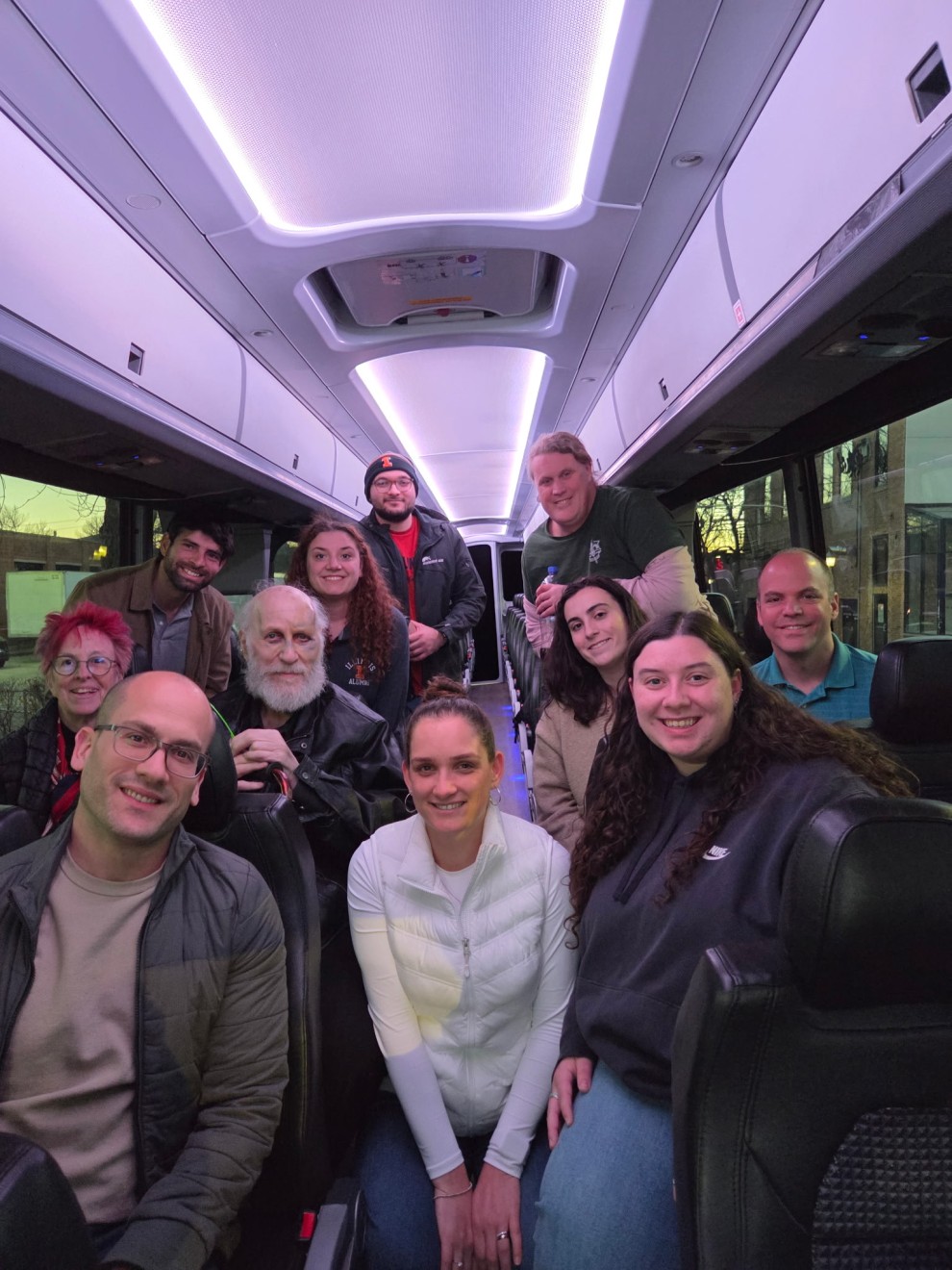
I felt that clearly during our community’s visit to the Nova Music Festival Exhibition in Chicago. It offered something many had not felt in months: validation.
Being together, witnessing the stories, seeing the names, hearing the music, standing in the space where memory is honored, this created a moment where our pain was not minimized or questioned. It was held. It was recognized. It was real.
For many of us, the exhibit served as a quiet reminder of what healing actually looks like:
being witnessed, not explained away;
being believed, not debated;
being accompanied, not abandoned.
We attended with 15 people representing all corners of our Jewish community — Hillel, Chabad, Sinai Temple, and CUJF — each bringing their own experiences and emotions into the space. As one participant shared, “this meaningful experience was a once in a lifetime opportunity.”
Systemic traumatic invalidation has taught many of us the wrong lessons:
Your suffering doesn’t matter.
You don’t belong.
Your pain is too much.
Your story can’t be trusted.
But the Nova exhibit, and the way our community showed up for one another, offered counter-messages:
Your grief is real. Your story matters. Your reactions make sense. You belong here.
These truths do not erase the harm, nor do they erase the ongoing challenges. But they offer something essential for wellness and healing: a foothold back into self-trust.
As we continue reflecting on the exhibit and its impact, we hold onto these grounding practices:
When doubt arises, remember what you saw, what you felt, and who stood beside you.
When judgment creeps in, return to compassion; your feelings fit the reality of what you’ve endured.
When exclusion makes you question your belonging, recall the room full of people who bore witness together.
When silence tempts you to shrink, remind yourself that your story deserves space.
This is not about competing traumas or diminishing anyone else’s suffering. It is about reclaiming our own.
If you would like to continue this conversation or share your own reflections, please reach out to the CUJF Jewish Family Service Coordinator at [email protected].
Bar-Halpern, M., & Wolfman, J. (2025). Traumatic invalidation in the Jewish community after
October 7. Journal of Human Behavior in the Social Environment, 1–28.
https://doi.org/10.1080/10911359.2025.2503441
The full text can be found here: Journal of Human Behavior in the Social Environment.